
The Collective Dreamwork of a Supervised Consumption Community
Moss Park Consumption & Treatment Service (CTS) is a supervised consumption site in downtown Toronto. The site began operating in 2017, when community members and harm reduction workers organized an unsanctioned overdose prevention site at the south end of Moss Park. This was a community-led response to a surge of overdose-related deaths in this downtown area of the city, run by more than 150 volunteers and operated out of tents.
The Moss Park site was the first of its kind in Ontario. People were able to consume previously obtained substances under the watch of volunteers trained to respond to overdose. Over the summer of 2018, the site became part of the South Riverdale Community Health Centre (SRCHC) and was granted a federal exemption from Health Canada and received funding from the Ministry of Health. The Moss Park site continues to provide holistic, integrated, and trauma-informed healthcare and social services, including drug-checking.
In August 2024, the Ontario Health Minister announced plans to introduce legislation prohibiting supervised consumption sites, and by June 2026, Moss Park CTS was forced to stop offering this life-saving service.
In 2025, the Museum of Dreams partnered with Moss Park CTS to gather data about this community’s dream life as an alternative means to document the impact of the political situation. Dreams became tools for listening to a community’s heartbeat, a way to attend to lives marked by a series of devastated social bonds, seismic upheavals that are at once intimate, political, and historical.
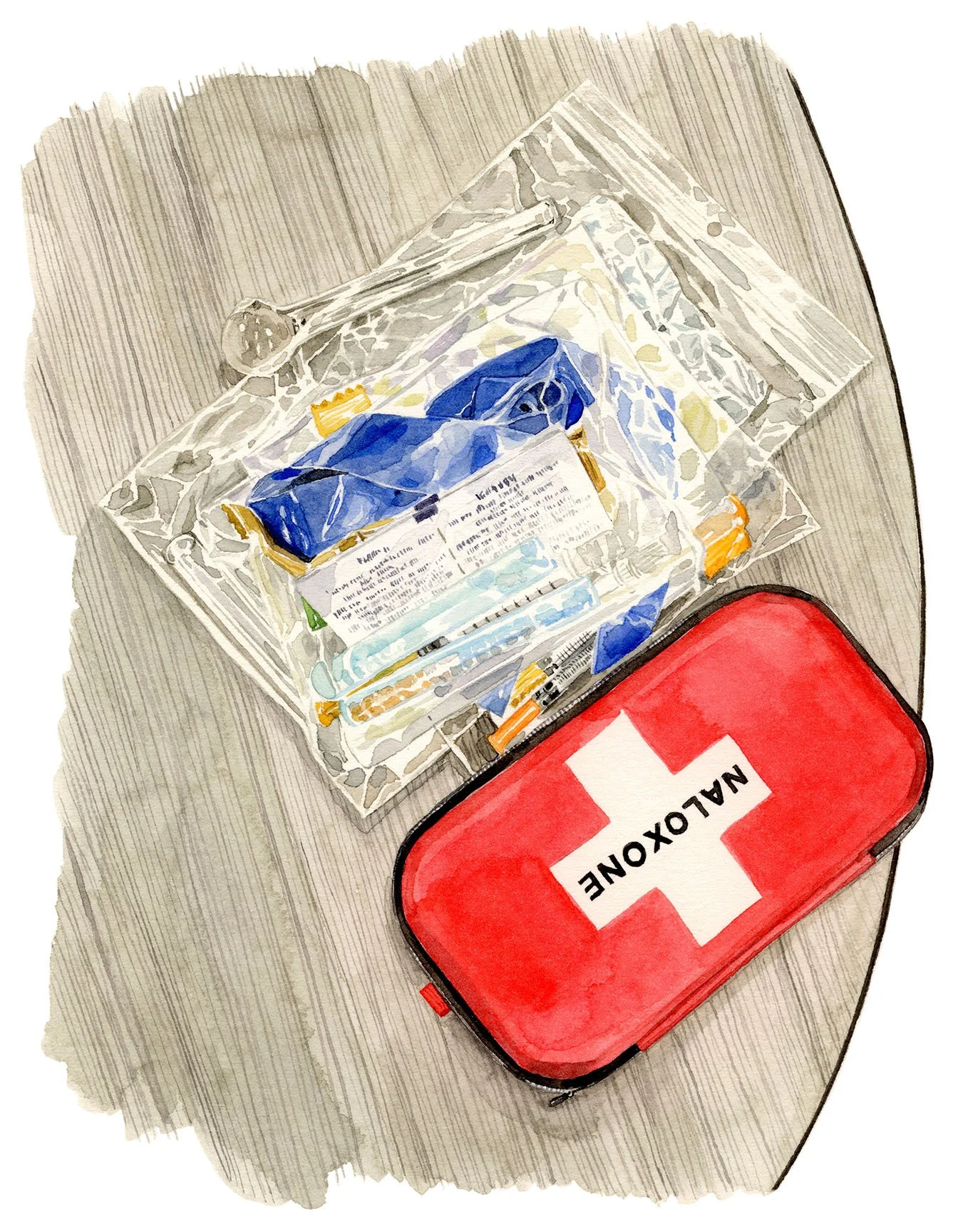
Illustrations by Melinda Josie
Executive Summary
Members of the Moss Park CTS community are disproportionately impacted by the social and structural determinants of health, including homelessness and unstable housing, increased exposure to violence, substance use, intergenerational complex trauma, and other forms of social abandonment. The force of this disproportionate impact is vividly evident in the community’s dream life.
Relatedly, Moss Park CTS community members are also disproportionately affected by sleep disturbances and acute dream loss, both of which have major health implications, especially in vulnerable populations. While the risks of sleep deprivation are well known, dream loss is a less well-recognized health hazard.
Despite their lack of access to essential resources, the Moss Park CTS community nevertheless manages to utilize their dream life to process and repair their lived experiences and to envision new futures. This collective dreamwork provides essential lessons about resilience, reciprocal forms of care, community cohesion, and survival.